Brickinfo English
Bangkok Unveils Southeast Asia’s First Real-Time Air Quality “Super Station” to Combat Dust Sources


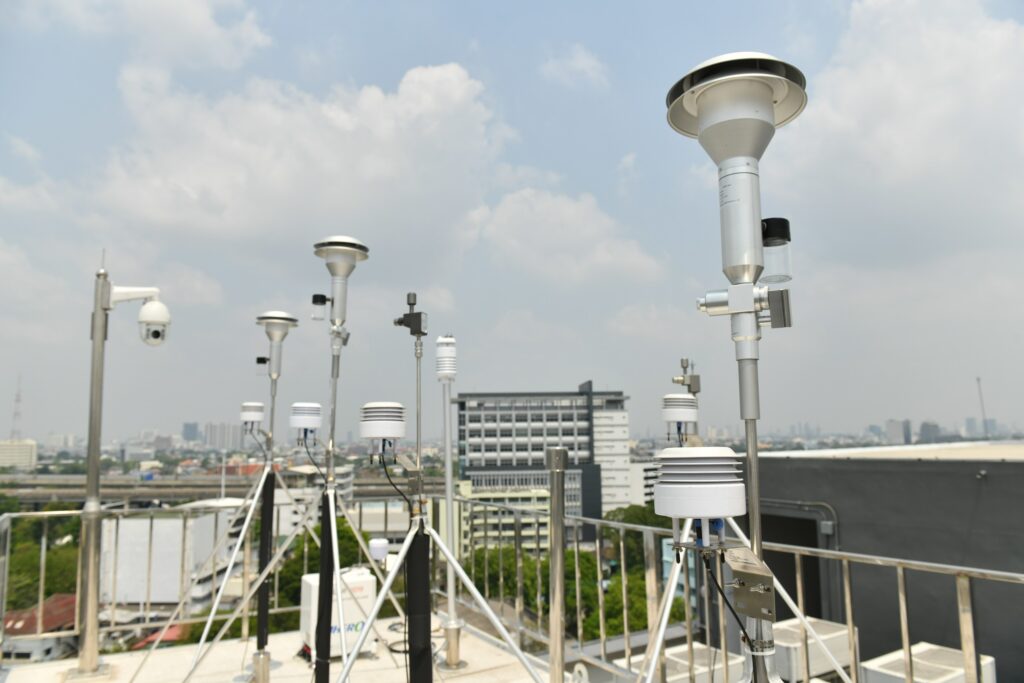
Brickinfo News Agency – Bangkok Governor Chadchart Sittipunt visited the newly developed Super Station at Kasetsart University to inspect advanced air quality monitoring technology capable of identifying the origins of PM2.5 dust in real-time. This facility, located at the Bang Khen campus, marks a significant shift from traditional lab-based analysis—which often takes months—to immediate, data-driven decision-making. By utilizing LIDAR technology and Artificial Intelligence, the station can distinguish between traffic emissions, biomass burning, and secondary aerosols, providing the city with the precise evidence needed to implement targeted environmental measures.
The Governor emphasized that while Bangkok has long maintained a network of monitoring stations, previous data only provided dust concentration levels without explaining where the pollution originated. The Super Station fills this gap by analyzing the chemical composition of particles, including Organic Carbon, Elemental Carbon, and Black Carbon. This information is integrated into Bangkok’s central “War Room,” allowing city officials to analyze the atmospheric structure vertically and consult on daily management strategies based on live scientific evidence.
“This is a major step in the fight against dust because we can now clearly and accurately identify the source of pollution. From information that was once invisible to a tangible understanding, this leads to more direct and effective problem-solving,” stated Governor Chadchart.
The project is a multi-sector collaboration involving Bangkok Metropolitan Administration (BMA), Kasetsart University, the Chinese Research Academy of Environmental Sciences, the Federation of Thai Industries, and Lihe Technology (Hunan) Co., Ltd. The facility, located on the 9th floor of the Faculty of Architecture, was established following a Memorandum of Understanding (MOU) and features technology valued at tens of millions of baht supported by Chinese environmental firms. It is recognized as the first integrated system of its kind in Thailand and Southeast Asia.
Pornphrom Vikitsreth, Adviser to the Governor and Chief Sustainability Officer, added that the technology addresses the three primary factors of Bangkok’s air pollution: urban traffic, outdoor burning from surrounding areas, and atmospheric conditions like the “boundary layer ceiling.” He noted that the use of LIDAR to scan the atmosphere allows the city to move beyond general forecasting toward a scientific evidence-based approach, proving whether current mitigation measures are actually working.
As air pollution issues grow more complex across the region, the BMA expects the Super Station to serve as a national model for air quality surveillance. The real-time data is intended to streamline coordination between local and provincial authorities, ensuring that interventions are accurate and improve the long-term quality of life for residents. The inspection was attended by key academic and environmental leaders, including Surat Bualert, the project head, and representatives from the Faculty of Environment and the Department of Environment.