Brickinfo English
Thai Astronomer Co-discovers 15 New Pulsars Using MeerKAT Radio Telescope

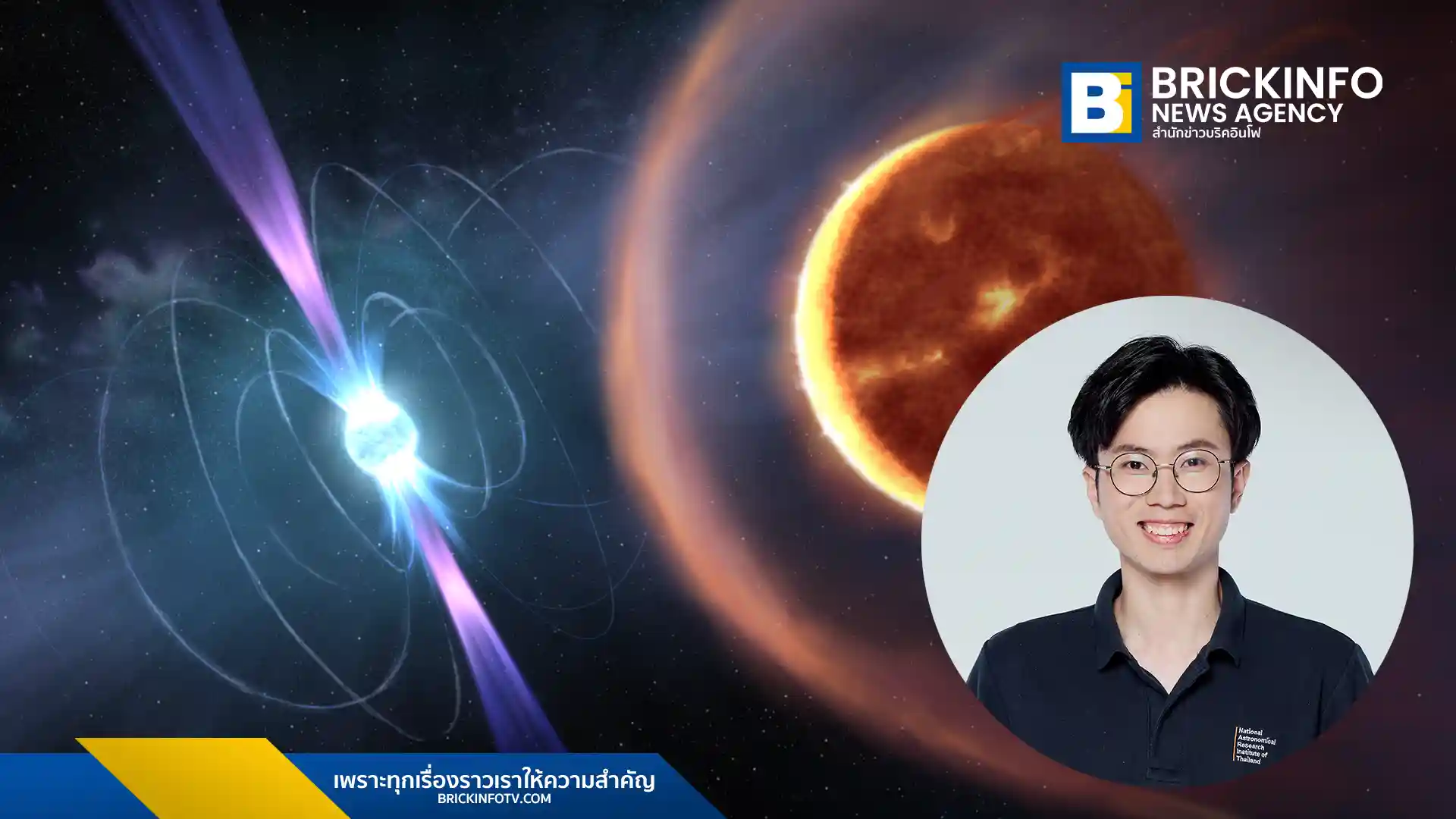
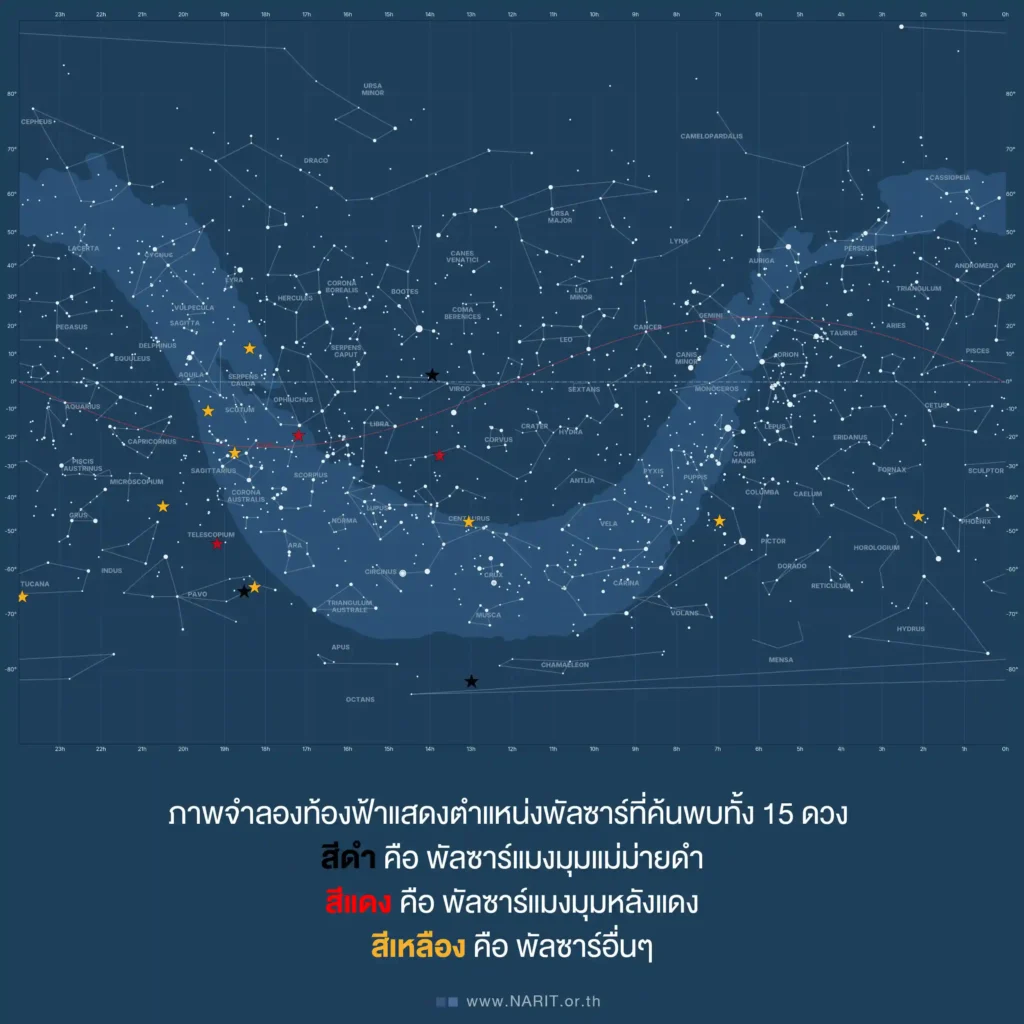
Brickinfo News Agency – A Thai astronomer from the National Astronomical Research Institute of Thailand (NARIT), in collaboration with an international research team, has announced the discovery of 15 new pulsars. The findings, published in the Monthly Notices of the Royal Astronomical Society on February 27, 2026, utilize data from the MeerKAT radio telescope to identify these rapidly spinning neutron stars. The discovery includes rare “spider pulsars,” providing a significant pathfinder for future deep-space surveys.
The research was led by Tinn Thongmeearkom from NARIT, working alongside the Transients and Pulsars with MeerKAT (TRAPUM) collaboration. The team focused on 79 unidentified gamma-ray sources (UnIDs) previously flagged by NASA’s Fermi Gamma-ray Space Telescope. By targeting these specific regions with the MeerKAT array—a 64-dish system operated by the South African Radio Astronomy Observatory (SARAO)—the researchers successfully identified 15 previously unknown pulsars that emit radio signals resembling the beams of a lighthouse.
Out of the 15 discoveries, six are classified as normal pulsars, while nine are millisecond pulsars (MSPs), which are capable of spinning hundreds of times per second. Notably, six of these MSPs were identified as “spider pulsars,” a rare binary system where the pulsar’s intense energy gradually consumes or blows away its small companion star. This celestial behavior is categorized into “black-widow” or “redback” pulsars based on the mass of the companion. Following the radio detection, the team confirmed that seven of these MSPs also emit gamma rays by analyzing data from the Fermi Large Area Telescope (LAT).
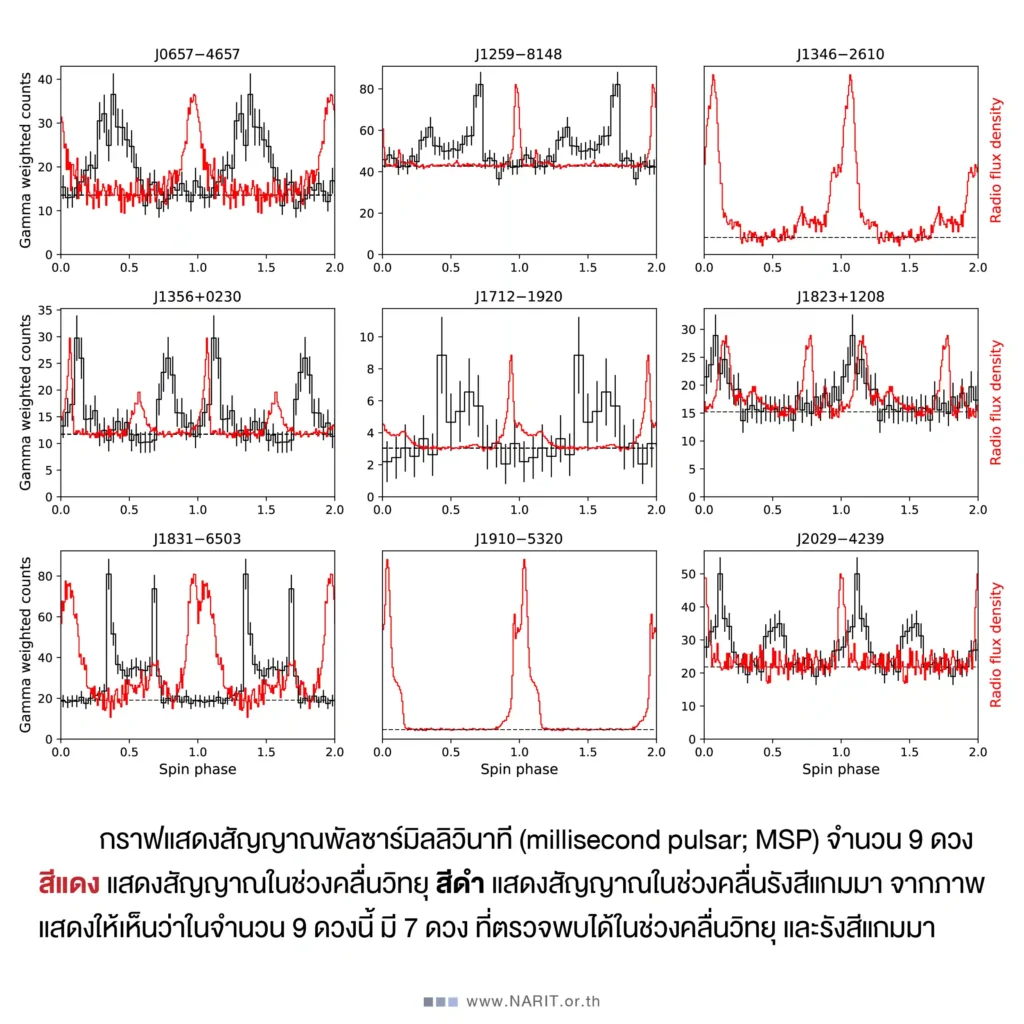
A key technical takeaway from the study is the comparative effectiveness of different frequency bands. The researchers concluded that Ultra High Frequency (UHF) is more effective than the L-band for detecting pulsars associated with Fermi sources. This insight serves as a critical precursor for the upcoming Square Kilometre Array (SKA), which is set to become the world’s largest radio astronomy facility.
“The discovery of 15 pulsars is just the beginning,” stated Tinn Thongmeearkom. “Astronomers can use these for further study, and some systems may provide valuable information that could help reveal the mysteries of the cosmos. However, these discoveries were made possible by everyone in the Fermi Sources Working Group of TRAPUM. Thank you.”
References:
[1] MNRAS: https://doi.org/10.1093/mnras/stag406
[2] arXiv: https://arxiv.org/abs/2602.20811