Brickinfo English
Bangkok Governor Credits Traffy Fondue for Slashing Complaint Resolution Time, Outlines Future AI City Integration

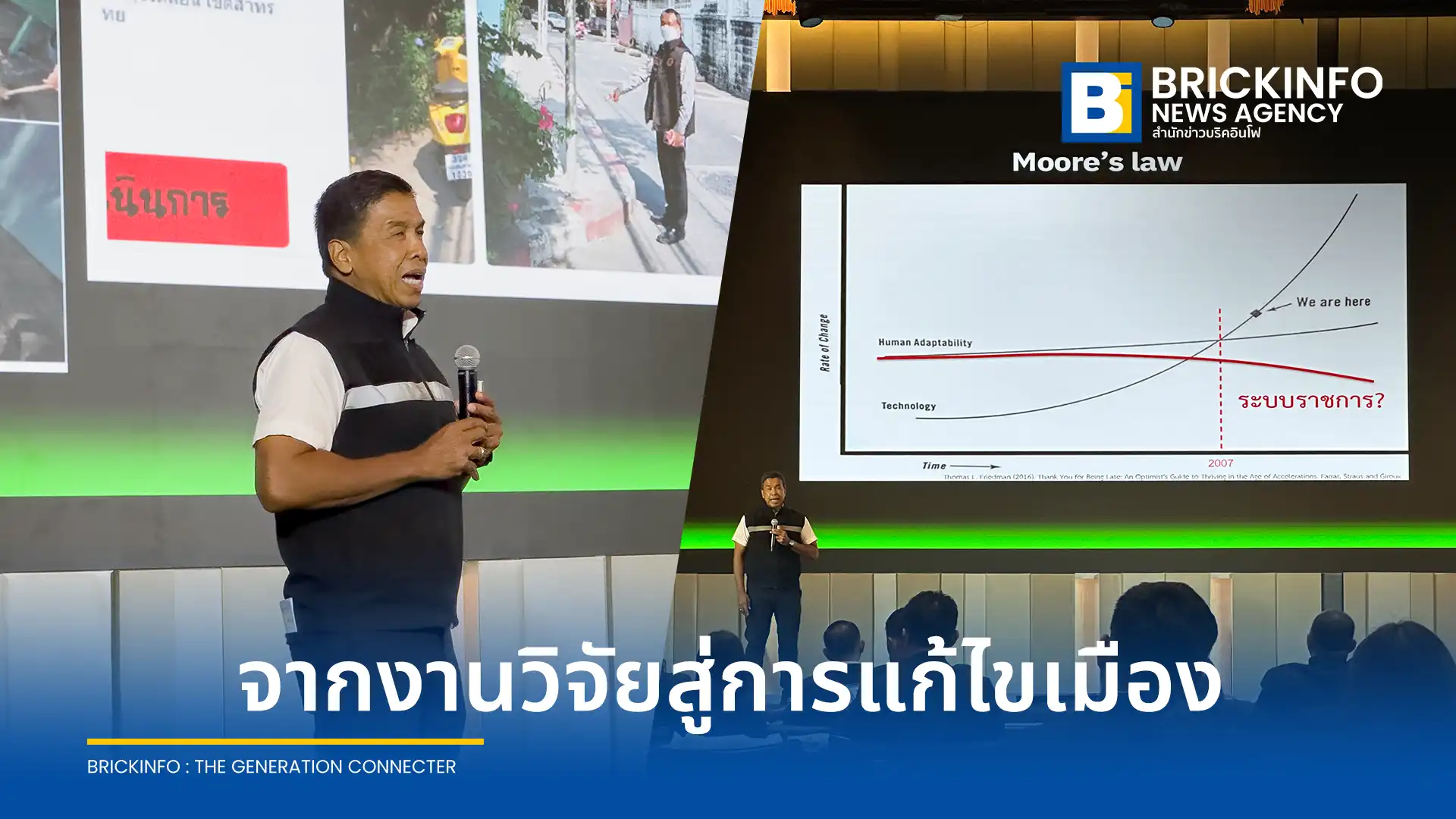
Brickinfo News Agency – Bangkok Governor Chadchart Sittipunt highlighted the transformative impact of the Traffy Fondue platform at the City Transformers Awards, revealing that average citizen complaint resolution times have plummeted from two months to just 1.9 days. Speaking at the Pullman King Power Bangkok, Chadchart emphasized a people-centric approach to smart city development, cautioning against blind reliance on technology and outlining future plans to integrate artificial intelligence with city CCTVs for automated urban problem detection.
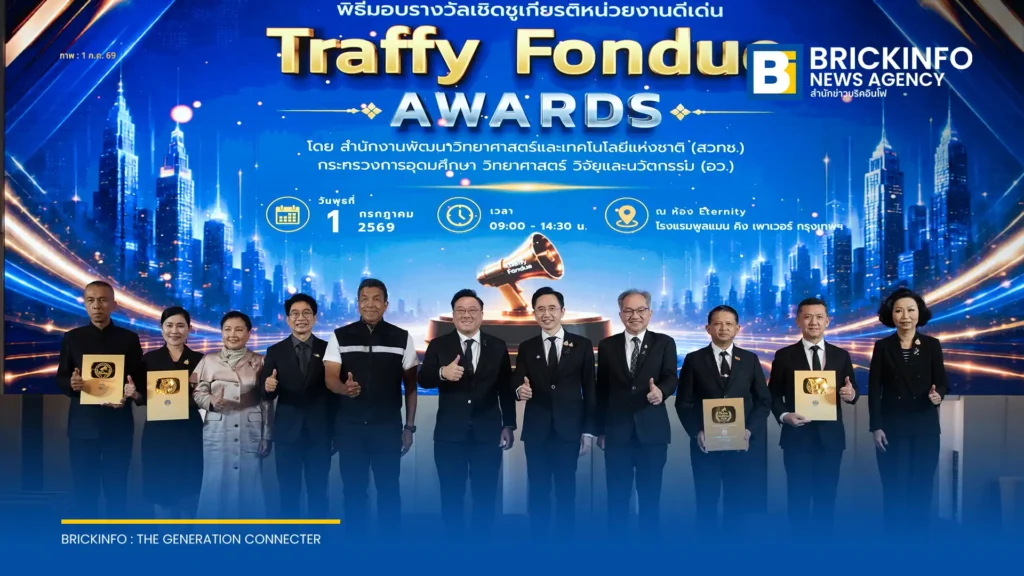
Addressing the Traffy Fondue: City Transformers Awards, organized by the National Science and Technology Development Agency (NSTDA) under the Ministry of Higher Education, Science, Research and Innovation (MHESI), Chadchart reflected on the platform’s utility since his first term. He noted that while bureaucratic processes inherently lag behind the rapid technological advancements described by Moore’s Law, adopting the right technological tools allows government systems to keep pace with change. However, he warned against becoming overly obsessed with the concept of a smart city. According to the governor, urban development must place citizens at the center rather than the technology itself, ensuring that any adopted system genuinely addresses public needs.
Chadchart referenced Ben Green’s book, The Smart Enough City, noting its strict alignment with the philosophy behind Traffy Fondue. He outlined three critical factors for successful urban tech: meeting public demand, technical feasibility, and appropriate budgeting. He highlighted that the Bangkok Metropolitan Administration (BMA) developed the system without requiring new budget allocations, thanks to support from the NSTDA. This contrasts with past BMA applications that consumed limited budgets but failed to gain traction because they ignored real user behavior.
The governor addressed the historical lack of trust between the public and the government, citing past perceptions of corruption, under-the-table money, and general inefficiency. Previously, a complaint required up to seven signatures before reaching the governor, creating a bottleneck that eroded public confidence. By removing gatekeepers, Traffy Fondue established a scalable, 24/7 system that allows direct action and citizen feedback. Statistics show that 61% of complaints are submitted outside official working hours. The platform has also proven vital during emergencies, such as a recent earthquake incident in Bangkok, where it facilitated the rapid structural inspection of over 20,000 buildings to reassure residents.
“Many Bangkok officials felt happy using Traffy Fondue because they felt they had never received compliments from the public before. At the same time, the seriousness of the management is also an important factor,” Chadchart stated.
He emphasized that the submission of over 1.34 million complaints reflects growing public trust, as citizens now believe their issues will actually be resolved. Regarding the future of technology, he cautioned against overestimating artificial intelligence, suggesting it should be viewed as an “Intelligent Assistant” (IA) since it cannot formulate questions without human prompts.
Looking ahead, the BMA plans to tackle operational loopholes, such as officials using artificial intelligence to manipulate photos to falsely claim a job is finished. Future developments will involve integrating artificial intelligence with the city’s CCTV network to automatically detect uncollected garbage and generate reports without human intervention. This data-driven approach aims to further streamline city management and support continuous urban development.