Brickinfo English
Gartner Identifies 4 Workforce Shifts Shaping the Future of Work as AI Matures


Brickinfo News Agency – Organizations face major workforce realignments as artificial intelligence matures, with Gartner, Inc. projecting that 30% of employees laid off due to AI replacement will need to be rehired by 2029 at significantly higher expenses. The research firm highlighted four strategic shifts that Chief Information Officers (CIOs) and business leaders must address to transition from simple task automation to sustainable workforce amplification.
According to Gartner’s analysis released in Bangkok, aggressive workforce reductions aimed strictly at short-term financial savings risk depleting talent pipelines, eroding institutional knowledge, and escalating future recruitment and onboarding costs amid slowing global labor growth.
“When business and IT executives look back on the early AI-era, they will realize their greatest mistake was believing that work automation was the point, when workforce amplification was the opportunity,” said Tori Paulman, VP Analyst at Gartner. “Business and IT executives who use AI primarily as a tool for cost cutting risk making reductions that are too deep and too soon, affecting their ability to innovate their business model and compete in new markets as AI continues to mature. Instead, they should develop a ‘talent remix’ strategy that uses AI to reshape roles and redirect workers from less productive work to new opportunities.”
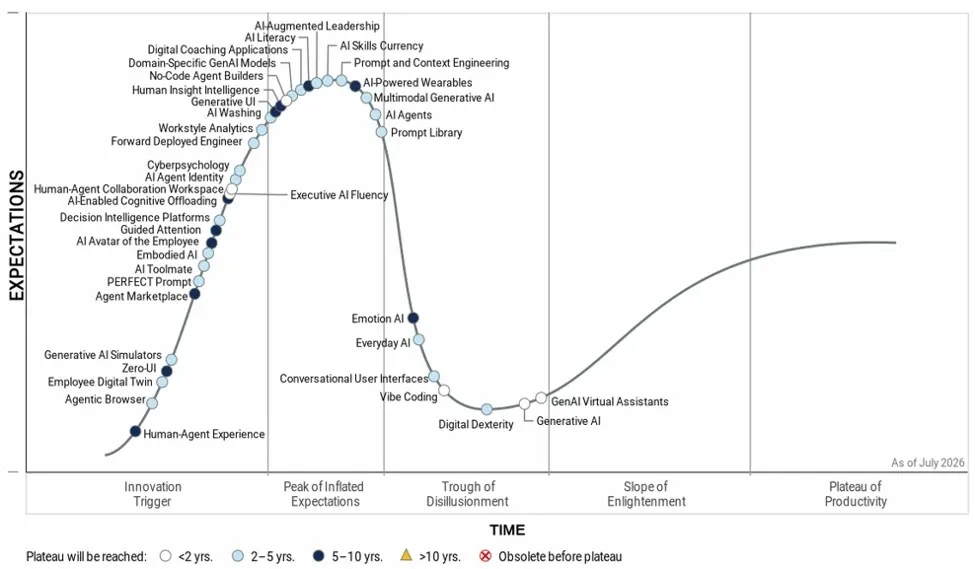
The firm outlined four critical shifts identified in its Hype Cycle for the Future of Work:
- Expanding Human Capability Through the Human-AI Relationship: Treating AI as a collaborative partner to enhance judgment, leadership, and decision-making while maintaining human accountability. Key technologies driving this include AI avatars, employee digital twins, digital coaching applications, and emotion AI.
- Empowering an AI-Ready Workforce That Adapts: Closing skill and readiness gaps by developing workforce adaptability rather than mere software adoption. This requires organizational investments in AI literacy, digital dexterity, AI-enabled skills management, and executive AI proficiency.
- Deepening Context, Judgment, and Meaning: Mitigating the risk of losing institutional knowledge and operational context by maintaining human oversight across automated systems. Supporting technologies include conversational user interfaces, decision intelligence platforms, and generative UI.
- Building a Foundation for Compound Value: Ensuring each AI deployment scales faster, safer, and more cost-effectively than previous implementations. Gartner estimates that by 2027, 75% of organizations using AI productivity gains solely for cost-cutting will be outpaced by competitors that reinvest those efficiencies into innovation, modern infrastructure, and employee upskilling.