Brickinfo English
Thailand Examines Power Market Reforms and AI Integration to Support Green Digital Economy


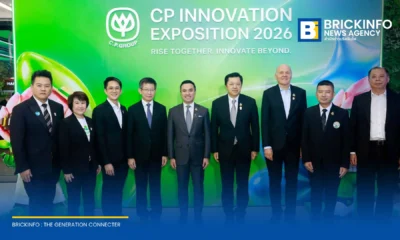
Brickinfo News Agency – Public regulators and private sector representatives gathered at the CP Innovation Exposition 2026 to discuss energy market reforms, clean power access, and digital infrastructure efficiency, addressing surging electricity consumption driven by artificial intelligence, cloud computing, and data centers.
The transition toward a green digital economy requires grid stability and fair cost distribution without burdening residential consumers. At the "Advancing Thailand's Power Market for the Digital Economy" session, Sarat Prakobchart, Deputy Director General of the Energy Policy and Planning Office (EPPO) under the Ministry of Energy, outlined policy directions for Direct Power Purchase Agreements (Direct PPA) and Third-Party Access (TPA) to the national grid. These mechanisms aim to allow private power transactions and direct clean electricity sourcing for data centers while balancing national energy security.
Regulatory bodies are also reviewing dedicated tariff structures. Gunn SaengRuang, Deputy Secretary General of the Office of the Energy Regulatory Commission (ERC), addressed the possibility of implementing a specific electricity tariff for data centers to cover reserve generation capacity, grid enhancements, and renewable intermittency. Aman Modi, Managing Director and Partner at Boston Consulting Group (BCG) Thailand, noted that major technology investors should secure their own electricity supplies under clear regulatory frameworks to prevent cost shifts to general consumers.
In the digital infrastructure sector, Arise IDC reported using artificial intelligence to automate energy load management and balance processing demands against grid constraints. The facility operates at a Power Usage Effectiveness (PUE) ratio between 1.3 and 1.4, incorporating a Battery Energy Storage System (BESS) for peak shaving and backup power alongside solar farm sourcing. Dr. Tarin Nimmanwudipong, Head of ESG at Arise IDC, stated that regulatory clarity regarding Direct PPA, TPA, and the Utility Green Tariff 2 (UGT2) remains a decisive factor for international investors evaluating Thailand against regional competitors.
Industrial and logistics operators are similarly incorporating automation to cut energy reliance. Dr. Tinnapon Kanlayasiripat, Senior Vice President at CPPC Public Company Limited, reported that its Sikhio manufacturing plant in Nakhon Ratchasima is developing the fifth phase of an on-site renewable energy initiative. Scheduled for completion in 2027, the 20.98-megawatt installation—comprising rooftop and floating solar arrays alongside battery storage—is projected to supply 14 hours of daily clean operations and target a cumulative 12,000-tonne reduction in carbon emissions between 2022 and 2027.
In logistics, All Now Logistics manages over one million annual domestic trips via cloud-based microservices architecture, according to Chief Commercial Officer Sanida Manakitpinyo. The system tracks fleet operations, route planning, and driver behavior using real-time GPS and predictive algorithms, aiming to lower carbon emissions and operational expenditure across supply chain networks through 2027.