Brickinfo English
AIS Reports THB 33.88 Million Social Return from Solar-Powered Telecom Project in Remote Communities

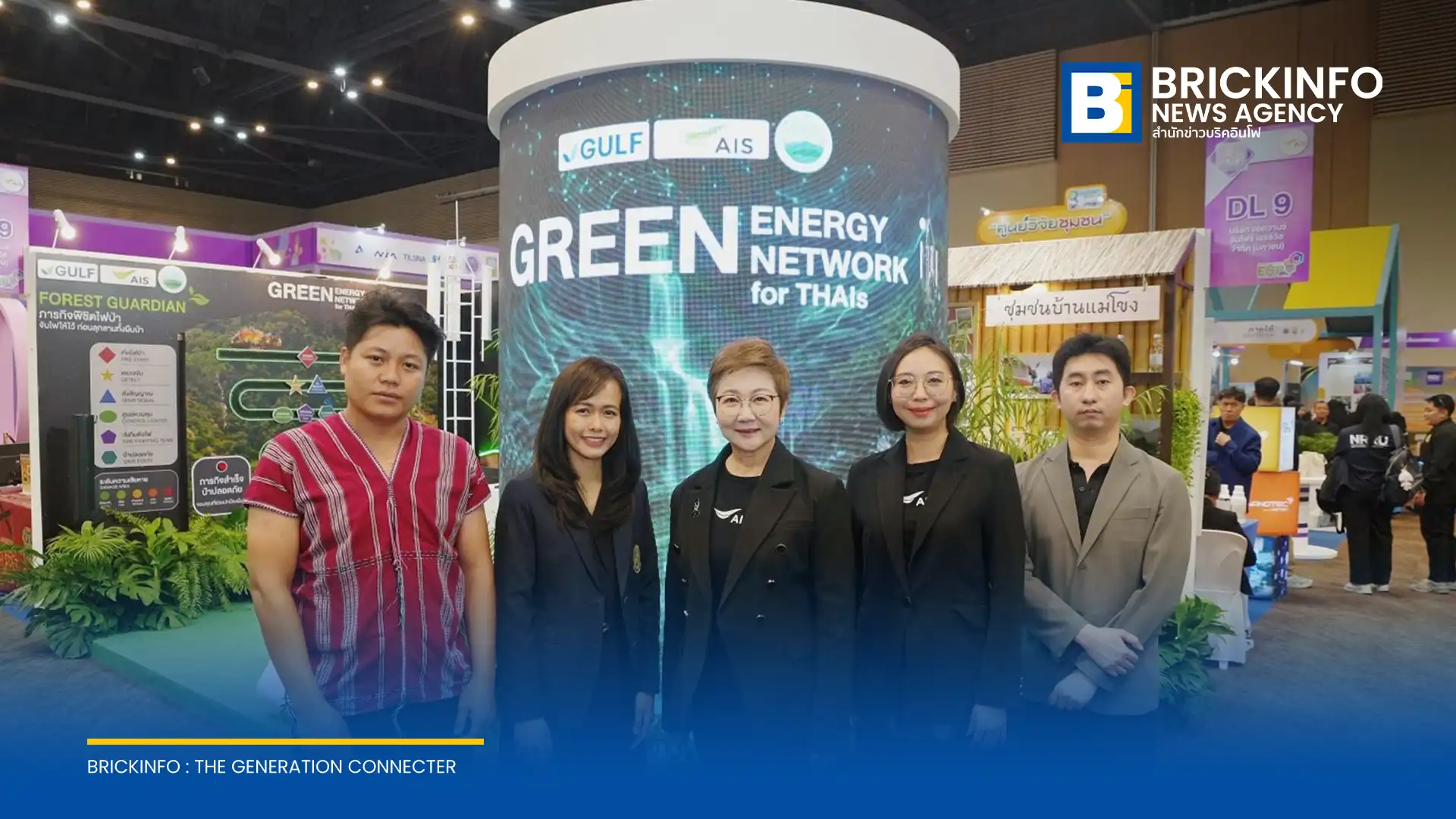
Brickinfo News Agency – Advanced Info Service (AIS) has reported a Social Return on Investment (SROI) of THB 33.88 million from its solar-powered telecommunications initiative, the Green Energy Green Network for THAIs. Presented at the Thailand Research Expo 2026, the findings highlight how a THB 24.89 million investment in clean energy and digital infrastructure is generating a 1.36-fold social return by connecting underserved remote communities to crucial economic, educational, and healthcare services.
The initiative is a collaborative effort between Advanced Info Service Public Company Limited (AIS), Gulf Development Public Company Limited (GULF), and the Highland Research and Development Institute (HRDI). By deploying solar-powered base stations in off-grid areas, the project directly addresses the lack of energy and communication infrastructure, delivering measurable impacts on local economies and environmental sustainability.
Saichon Submakudom, Chief Corporate Communication Officer at AIS, stated, “Throughout the implementation of the Green Energy Green Network for THAIs project with our partners, we have witnessed meaningful changes across many communities. Areas that once lacked both electricity and connectivity now have access to education, healthcare services, and opportunities to generate income through digital technology.” The project currently reaches eight communities across five provinces—Chiang Mai, Chiang Rai, Mae Hong Son, Lamphun, and Tak—benefiting more than 3,520 people from 918 households.
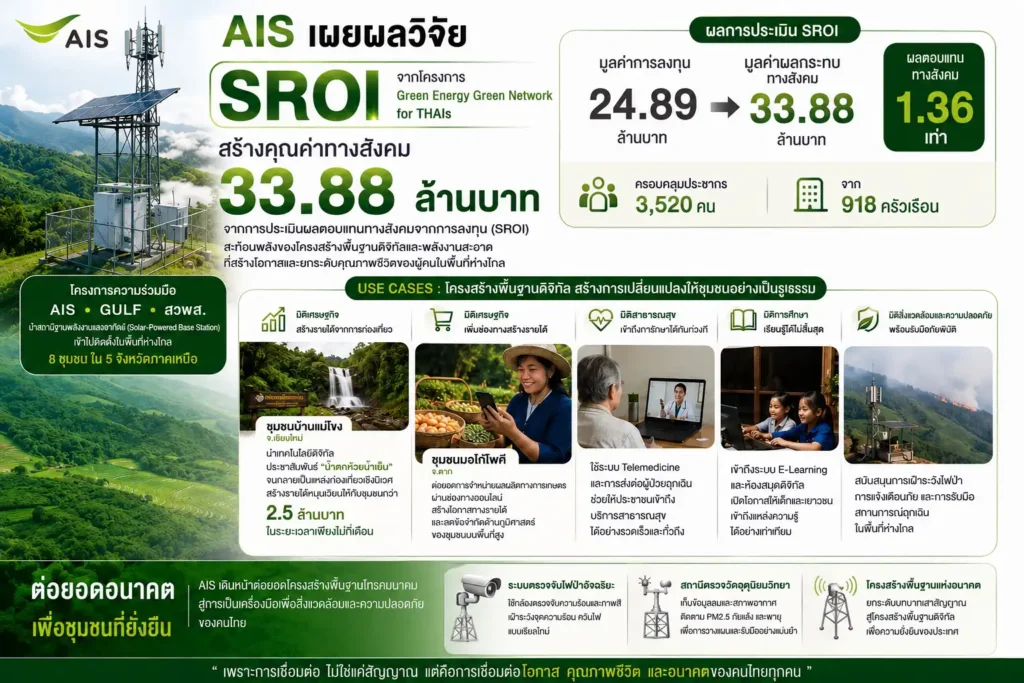
Real-world applications of this digital connectivity have yielded tangible economic growth. In the Ban Mae Khong community in Chiang Mai, residents utilized online platforms to promote the Huai Nam Yen Waterfall, transforming it into an eco-tourism destination that generated over THB 2.5 million within a few months. Similarly, residents in Tak Province’s Mokopoki community are now using digital tools to market agricultural products online, overcoming geographical barriers. The infrastructure also supports digital libraries, telemedicine, and emergency medical referrals.
Moving forward, the partners plan to expand the functionality of these mobile network towers into platforms for environmental monitoring. Future developments include integrating AI-powered wildfire detection solutions, PM2.5 dispersion tracking, and real-time anomaly alerts for disaster preparedness. “The findings do not merely reflect a social return figure; they demonstrate how investments in digital infrastructure and clean energy can create meaningful change in people’s lives,” Saichon added. “When everyone has equal access to opportunities, that is where sustainable national development truly begins.”