Brickinfo English
Ericsson Launches AI in RAN Software to Boost 5G Network Efficiency and Performance

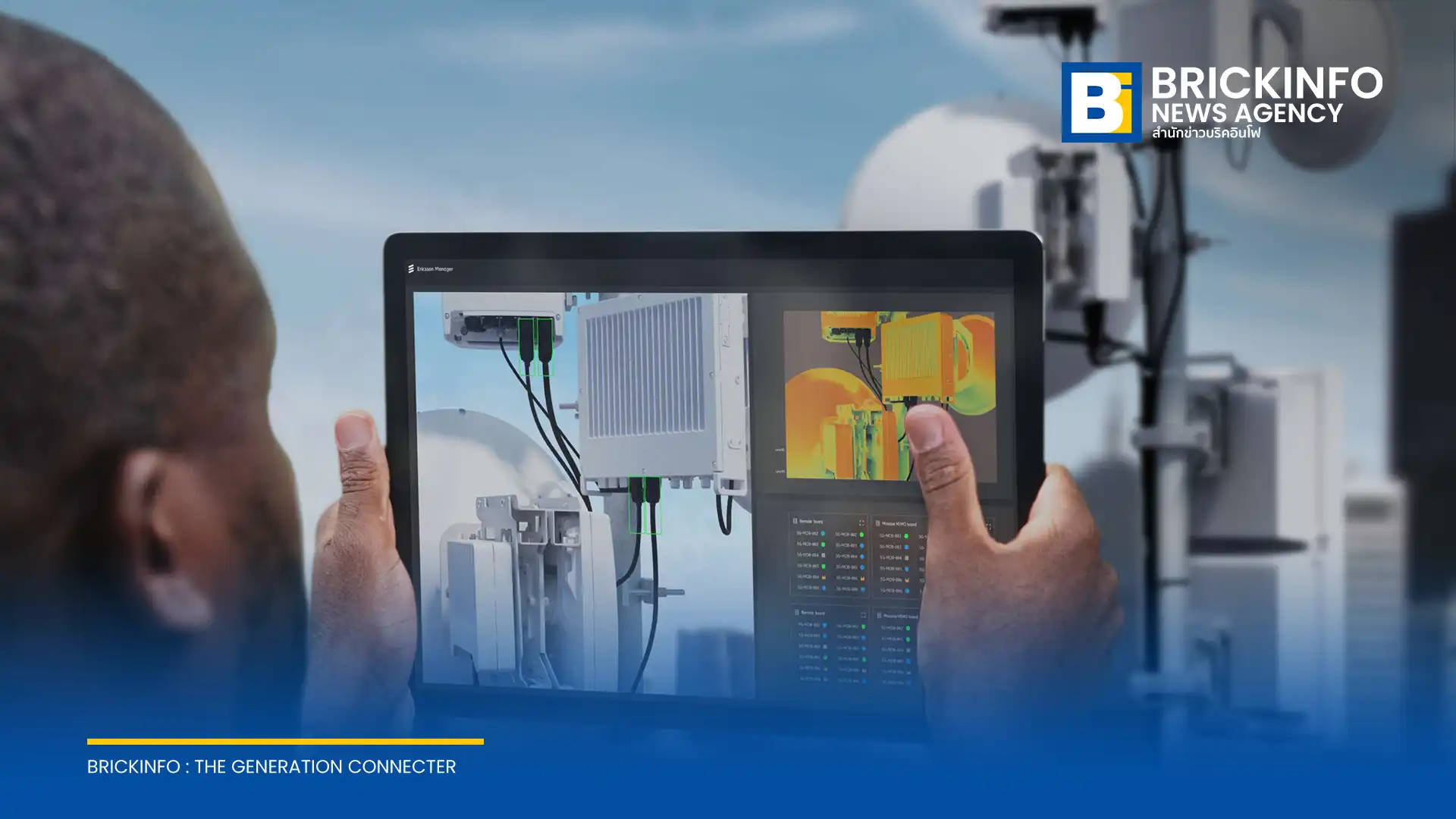
Brickinfo News Agency – Ericsson has officially introduced AI in RAN, a new software subscription designed to integrate telco-grade AI models directly into basebands and radios. Designed for 5G networks, the solution aims to enhance operational efficiency, network performance, and energy savings for communications service providers (CSPs). The commercially scalable software allows operators to transition toward AI-native RAN environments without requiring additional hardware infrastructure.
The new AI in RAN software introduces real-time, telco-grade AI models built for ultra-low latency inference at the microsecond level, offering high reliability across dynamic radio access network environments. The software incorporates continuous learning powered by scalable data alongside agentic AI support to drive advanced RAN automation and network operations.
According to Mårten Lerner, Head of Networks Strategy & Product Management at Ericsson, the software represents a major shift toward AI-native networks, building upon the AI-ready radios the company unveiled earlier this year. Nitin Bansal, Managing Director of Ericsson India, added that the software brings AI into networks to elevate operational efficiency, enhance performance, and open new business opportunities for service providers in the AI era.
Compatible with Ericsson 5G Advanced across both purpose-built and Cloud RAN platforms, the software utilizes Ericsson Silicon for energy-efficient AI inference alongside the latest generation of RAN Compute. Initial features, available in Q2 2026 with further updates planned later in the year, include an AI-native Scheduler for Link Adaptation, AI-powered Macro Positioning, AI-managed Beamforming, AI-powered Multi-layer Coordination, and Augmented Observability.
Commercial deployments and trials across more than 15 global locations have demonstrated up to a 20 percent increase in downlink throughput and a 10 percent improvement in spectral efficiency. Additionally, the software supports up to two times more high-traffic users, delivers 90 to 95 percent coverage prediction accuracy, and achieves up to a five-fold increase in user-positioning precision.
Global telecommunications executives have noted the operational impacts of the technology during validation. Teruyuki Oya, Senior Vice President & CNO at SoftBank Corp., stated that the software helps turn AI innovation into practical value on live networks by enabling real-time optimization of radio performance, spectrum efficiency, and user experience. Bruce Dean, Senior Vice President of Network Technology & Operations at Bell, highlighted that integrating AI directly into the RAN improves energy efficiency and customer experience. Yu Takki, Head of Network Technology Office at SK Telecom, mentioned that the collaboration helps advance AI-RAN to lay the foundation for AI-native 6G, while Mark Kennedy, Chief Technology Officer at Rogers, noted that the software optimizes real-time network performance and reduces energy consumption.
Industry analysts have also noted the financial practicality of the software-based upgrade. Joe Madden, Principal Analyst at Mobile Experts, stated that the solution could offer mobile operators their best return on investment in years, allowing them to extract more capacity, better observability, and more accurate location-based services out of existing 5G infrastructure.