Brickinfo English
NARIT Partners with ESA on ARRAKIHS Mission to Simulate Dark Matter Space Telescope

Brickinfo News Agency – The National Astronomical Research Institute of Thailand (NARIT) has officially joined the European Space Agency (ESA) on the ARRAKIHS mission, an upcoming fast-class space telescope project scheduled for a 2030 launch to investigate the fundamental nature of dark matter. This collaboration marks the first time a Thai research institute has integrated into both the scientific and technical teams of an approved ESA space mission, utilizing Thailand’s CHALAWAN high-performance computing system to process essential mock image simulations for the international consortium.
Unanimously approved by all 23 ESA Member States during the Science Programme Committee meeting in Tenerife, Spain, on June 10-11, 2026, the ARRAKIHS space telescope is designated as ESA’s second Fast-class (F2) science mission. The project aims to survey a minimum of 80 Milky Way-like galaxies over a three to five-year period. By focusing on faint, low-surface-brightness structures such as stellar streams and tidal tails, the mission will analyze the remnants of ancient galaxy mergers. These observations will serve as fossil records to help astronomers test current dark matter models and trace the evolutionary timeline of the Universe.
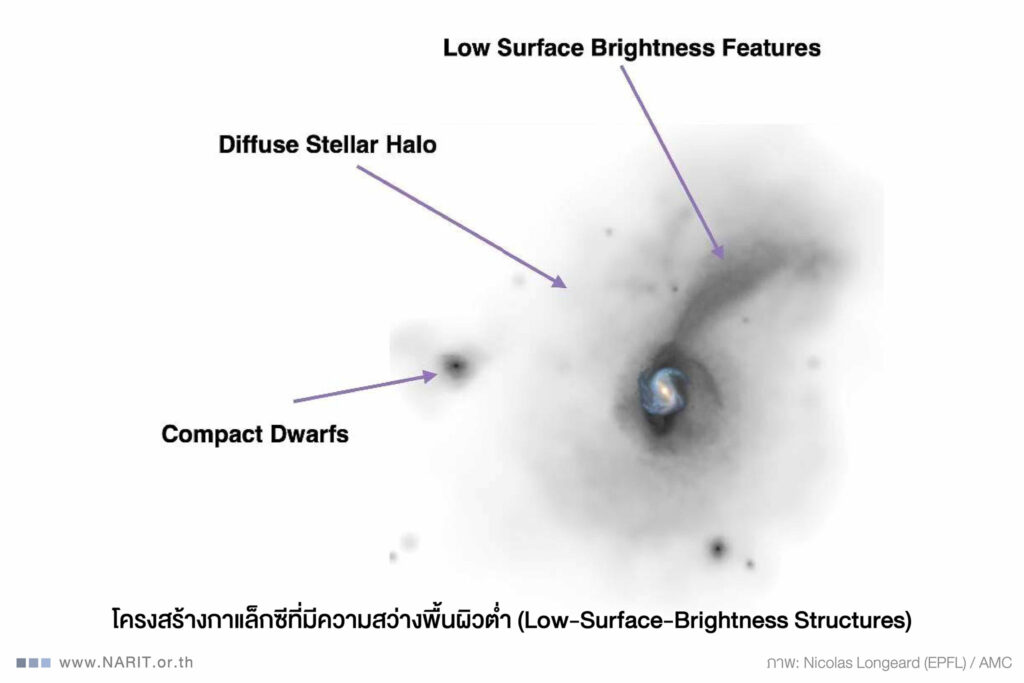
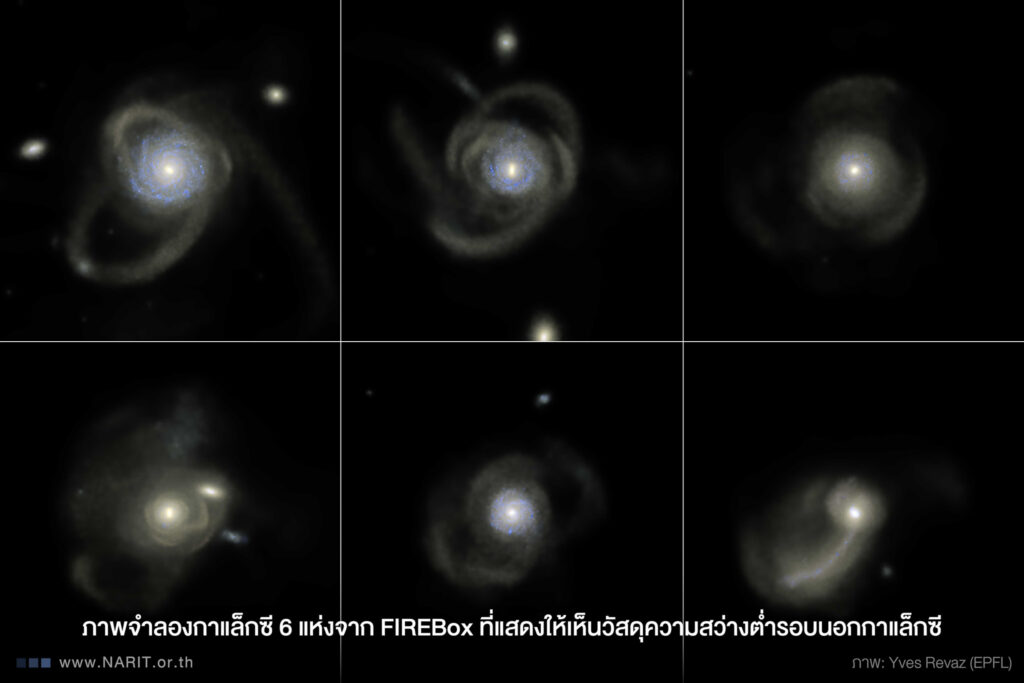
Mock image simulations are critical for the preparation of this mission, enabling the ARRAKIHS Mission Consortium (AMC) to evaluate the telescope’s expected image quality and scientific capabilities prior to deployment. Dr. Krittapas Chanchaiworawit, a researcher in cosmology and high-energy astrophysics at NARIT, initiated the development of the mission’s core simulation software in 2018. He currently serves as the official liaison between the Thai institute and the AMC, a group comprising over 250 global scientists and engineers.
The heavy computational processing required for these simulations is primarily executed on NARIT’s CHALAWAN supercomputer, making it one of only four major global systems supporting the mission, alongside facilities in Spain, the United States, and Switzerland. The infrastructure is managed by Dr. Utane Sawangwit, while research assistant Wissarut Jarernsupapon handles the direct execution and performance optimization of the mission simulations. Furthermore, research assistant Narenrit Thananusak is actively applying the newly generated simulated data to advance independent research on galactic evolution.